Network+ Exam
Encapsulation
October 29, 2025
- #network+
Encapsulation
The process of putting headers (and trailers) around some data. similar to putting a letter in an envalope. when someone takes it out the envelope that’s decapsulation.
As data moves up or down the OSI it’s being encapsulating and decapsulated. as you move down its’s encapsulated.
PDU(protocol data units) as data is moved you get the layers header.
L7 PDU
1 bit , 2 fram3, 3 packet, 4 segment, datagramds. you’re adding headers all the way down.
At layer 4 you get the header for TCP. 20 byts
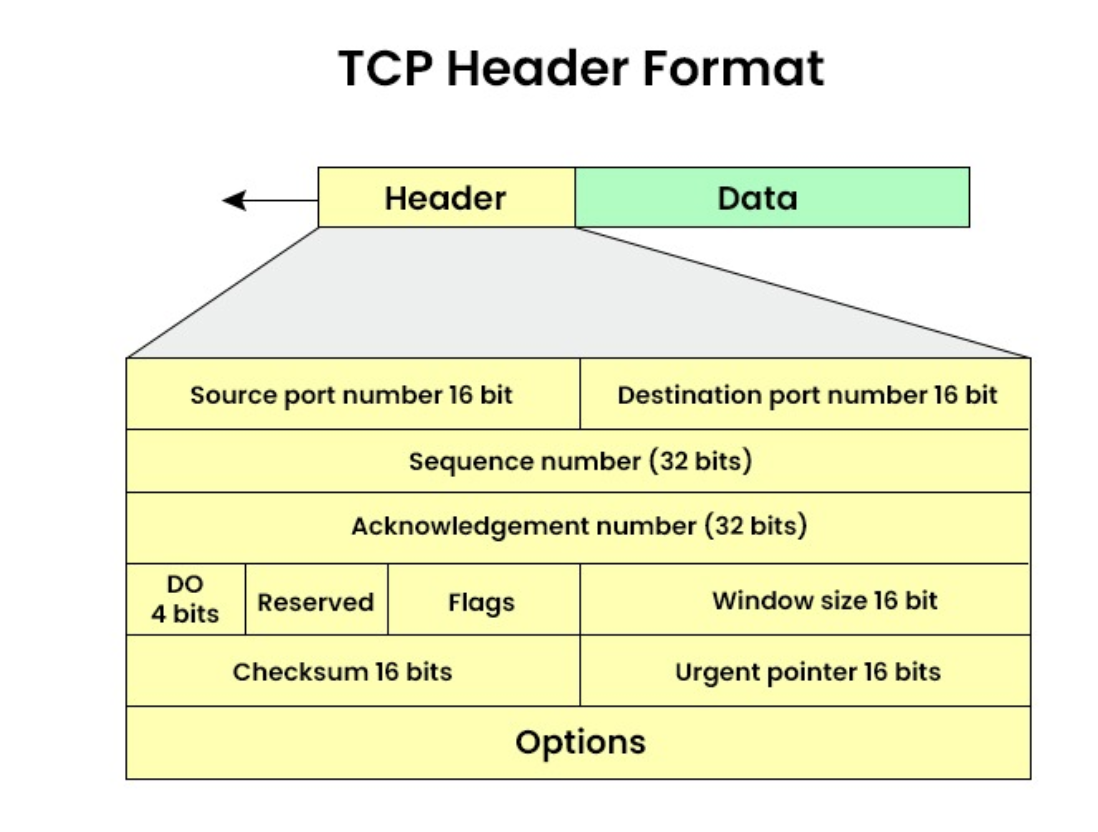
source, dest helps determine where data is being sent and where it’s going.
SYN - Syncrinization: used to syncronize the connetion during tht 3 way handshake,
ACK (Ackwledgement) : Used durint the threeway handshake but also ue to acknowledg the successful recipt of packets.
FIN (Finished): used to tear down the virtual connection
RST(Reset) : when a client or server recives a packet that it was not expecting.
PSH(push) used to ensure tata is given priorty and is processed at the sending
URG(urgent) similar to PSH and identifies data as urgent. process immediataly.
UDP header is 8 bytes.

Layer 3. You add another header the IP HEADER.

Layer 2 you add th ethernet header.

MAC address: Physical address that is used to ID a network card on a local network
EtherTYPE used to indicate which protocol is being encaplacated.
Frame at layer 2 also has a payload.
by default 1500 mtu is the default, if yo uneed more then you have to enable jumbo frames.
As data moves to from 7 to 1 you’re adding the headers at each layer, at layer 4 add the ports at layer 3 add the ip address at layer 2 you add the MAC address at layer 1 you’re adding the pulses. then it’s encapsulated bac up.